 Grooved Fittings







Introduction
Plumbing systems vary significantly depending on the type of building. Residential and commercial plumbing systems differ in scale, complexity, pressure requirements, and maintenance needs.
Choosing the right system and understanding its structure helps prevent failures and ensures efficient water distribution.
What Are the Main Types of Plumbing Systems?
Plumbing systems are generally classified into:
- Residential plumbing systems
- Commercial plumbing systems
- Industrial plumbing systems
Each type is designed based on water demand, building size, and usage patterns.
Residential Plumbing Systems Explained
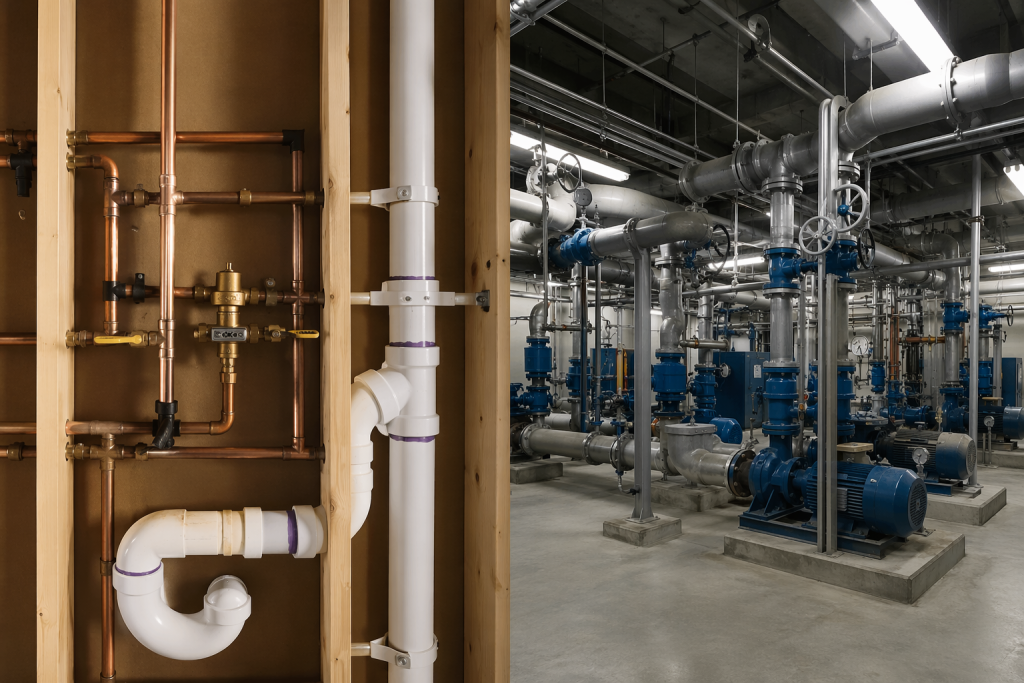
Residential plumbing systems are designed for homes and small buildings.
Key Attributes:
- Lower water demand
- Simpler pipe network
- Fewer fixtures
Components:
- Pipes (PVC, copper)
- Valves
- Fixtures (taps, showers)
These systems are easier to install and maintain.
Commercial Plumbing Systems Explained
Commercial plumbing systems are used in large buildings such as offices, malls, and hotels.
Key Attributes:
- High water usage
- Complex pipe networks
- Advanced pressure management
Components:
- Large-diameter pipes
- High-capacity valves
- Multiple fixtures across floors
Key Differences Between Residential and Commercial Plumbing
1. System Complexity
- Residential: simple layout
- Commercial: multi-layered networks
2. Water Pressure Requirements
- Residential: moderate pressure
- Commercial: high pressure systems
3. Pipe Size and Capacity
- Residential: smaller pipes
- Commercial: larger pipes for higher flow
4. Maintenance Needs
- Residential: occasional maintenance
- Commercial: frequent inspections
Common Problems in Residential vs Commercial Systems
Residential Issues:
- Low pressure
- Pipe leaks
- Blockages
Commercial Issues:
- Pressure imbalance
- System overload
- Valve failures
Choosing the Right Plumbing System
Selecting the correct system depends on:
- Building size
- Water demand
- Usage frequency
Using the right pipe fittings and installation components ensures durability and efficiency.
Why System Design Matters
A well-designed plumbing system:
- Prevents pressure issues
- Reduces maintenance costs
- Improves water efficiency
Conclusion
Residential and commercial plumbing systems serve different purposes but rely on the same core principles: pressure control, efficient flow, and proper component selection.
Understanding these differences helps in choosing the right system and maintaining it effectively.


 Gas Regulators
 Gas Meters
 Accessories
 Hoses
Hoses Manifold
 Stoves
 Valves
 Brands
